Reading Your Tire Tread: What Those Knobs Are Actually Telling You
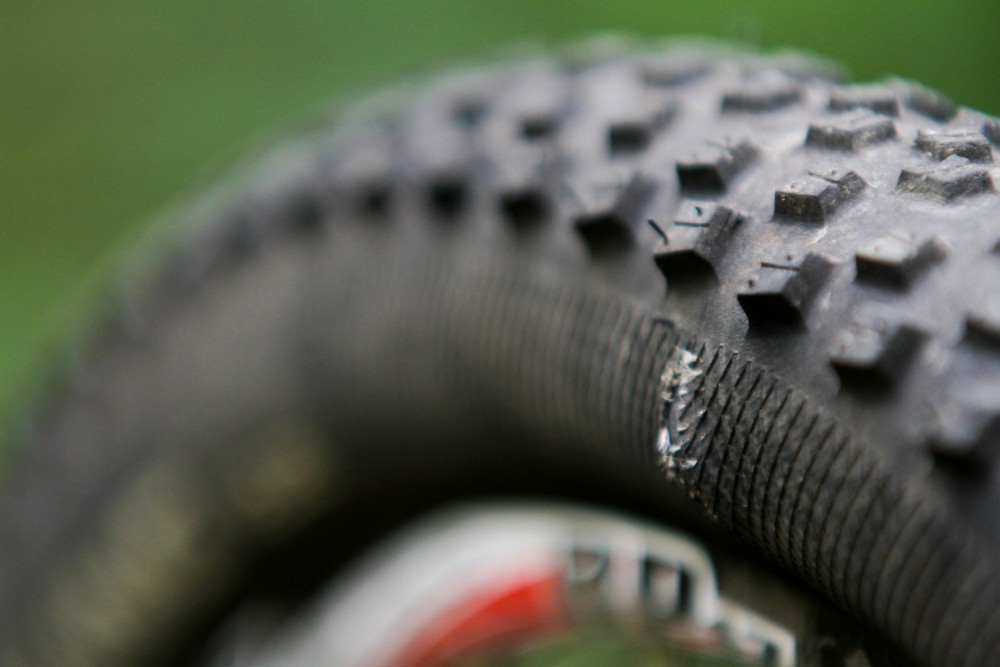
Most riders don’t think about their tires until something goes wrong. A flat, a slide-out on a wet corner, a vague mushiness that wasn’t there last month. But your tread has been telling you things the whole time. You just have to look.
What the Knobs Actually Do
Every knob on a mountain bike tire has a job. The center knobs handle braking and acceleration on straightaways. The side knobs catch you in corners. The transition knobs between them bridge the gap as you lean the bike over.
This isn’t decorative. A tire designer spent months tuning the height, spacing, and shape of those knobs for specific conditions. Tall, widely-spaced knobs shed mud and bite into loose soil. Short, tightly-packed knobs roll faster on hardpack and pavement. The sipes, those tiny slits cut into each knob, let the rubber flex and conform to rock surfaces and roots.
When you look at a new tire versus a worn one, the difference is obvious. But the tricky part is recognizing when you’re in the middle, when the tire still looks fine but has quietly lost the grip you’re counting on.
Center Knobs Go First
Here’s something most riders don’t realize: your center tread wears out way before your side knobs. Think about it. Unless you’re railing berms every ride, most of your tire contact is straight-line rolling on the center strip. Those center knobs take the brunt of braking forces too.
I see this constantly on customer bikes. The side knobs look practically new, sharp edges, full height. But the center row is rounded over, maybe half its original height. The rider thinks the tire is fine because the edges look good. It’s not fine. Those rounded center knobs are why you’re skidding on gravel descents that used to feel predictable.
The Sipe Test
The most reliable way to check knob wear without a caliper is to look at the sipes. Fresh knobs have deep, clearly defined slits. As the rubber wears down, those sipes get shallower. Once a sipe is barely visible or gone entirely, that knob has lost a significant amount of rubber and most of its ability to deform around obstacles.
Run your thumbnail across a center knob. On a new tire, you can feel the sipe catch. On a worn one, your nail slides right over. That’s your signal.
Some tires from Schwalbe and Continental have built-in wear indicators, small dimples or grooves molded into the tread surface. When the dimple disappears, the tire is done. But most mountain bike tires don’t have these, so the sipe test is your best friend.
Squared-Off Profile
A new tire has a rounded cross-section. As you ride, the center flattens out while the sides stay round. Hold a worn tire up and look at it from the front. If the profile looks more like a square than a circle, the center compound is significantly depleted.
This matters more than cosmetics. A squared-off tire transitions poorly from straight-line to cornering. There’s a dead zone in the lean angle where neither the flat center nor the side knobs are fully engaged. That dead zone is where sketchy moments live.
The Sidewall Check
While you’re looking at tread, check the sidewalls too. This is a different kind of wear, not from rolling contact but from rock strikes, rim rub, and UV degradation. Look for:
- Cuts or slashes that expose the casing threads underneath
- A lighter color or chalky texture (UV damage to the rubber compound)
- Bulges or deformations (casing damage, often from riding underinflated)
A tire with good tread but damaged sidewalls is a blowout waiting to happen. I’ve seen sidewall failures at speed. They’re not gentle. The tire folds, the rim digs in, and you’re going over the bars before your brain registers what happened.
Compound Hardness Changes
Rubber hardens over time, even on a tire that’s been sitting in a garage. UV light and ozone break down the plasticizers that keep rubber supple. A three-year-old tire with full tread depth can grip worse than a one-year-old tire that’s half worn, simply because the compound has hardened.
Press your thumbnail into the tread surface. Fresh rubber deforms easily and bounces back. Old, hardened rubber resists the nail and feels almost plasticky. If you’ve had the same tires on for two-plus years, age alone might be your problem.
Mismatched Wear is Normal
Your rear tire wears roughly twice as fast as your front. It carries more weight, handles all the drive forces, and bears the brunt of braking (yes, even if you use your front brake more, the rear still skids first when things get loose). Running a newer tire on the rear and a slightly worn one on the front is standard practice.
Smart riders rotate like this: buy a new tire, put it on the rear. Move the old rear to the front. Toss the old front. You always have your freshest rubber where it matters most for traction and drive.
When to Actually Replace
So when do you pull the trigger? Here’s my checklist, roughly in order of urgency:
Replace immediately: visible casing threads through the tread or sidewall. Any bulge or deformation in the sidewall. Cuts deep enough to see the puncture protection layer (usually a different color than the black tread rubber).
Replace soon: center knobs worn to less than half their original height. Sipes completely gone on center knobs. Squared-off profile that makes cornering feel vague. Frequent unexplained loss of traction.
Think about it: rubber feels hard and plasticky. Tire is more than two years old regardless of visual wear. You’re switching terrain types (moving from trails to mostly pavement or vice versa).
The cost of a new tire is $40-80. The cost of a washed-out front end on a fast descent is a lot more, in body and bike damage both. Tires are the cheapest performance and safety upgrade on your bike, and also the most neglected.
Choosing Your Next Tread
If you’re replacing, think about where you actually ride, not where you wish you rode. I see a lot of aggressive mud tires on bikes that never leave fire roads. Those big knobs are rolling resistance you don’t need, buzzing on hardpack and wearing fast on pavement.
For most Bay Area riding, a versatile trail tire with medium-height knobs and moderate spacing handles the mix of packed dirt, loose gravel, and occasional pavement that makes up a typical ride from the Presidio through the headlands. Save the full mud spikes for Tamarancho in February.
Not sure what your tires are telling you? We do free estimates on tire condition as part of any service. Presidio Bikes is mobile bike repair in San Francisco, and we come to you. presidiobikes.com