Everything You Need to Know About Flat Tires (and How to Stop Getting Them)
You’re halfway through Golden Gate Park, the light is perfect, your legs feel good — and then you hear it. That unmistakable hissing. Or worse, you feel the rim start grinding against pavement. Your ride is over.
Flat tires are the single most common mechanical failure in cycling. Nearly half of all cyclists deal with at least one per year. Some riders get them every few weeks. Others ride thousands of miles between flats. The difference usually isn’t luck — it’s knowledge.
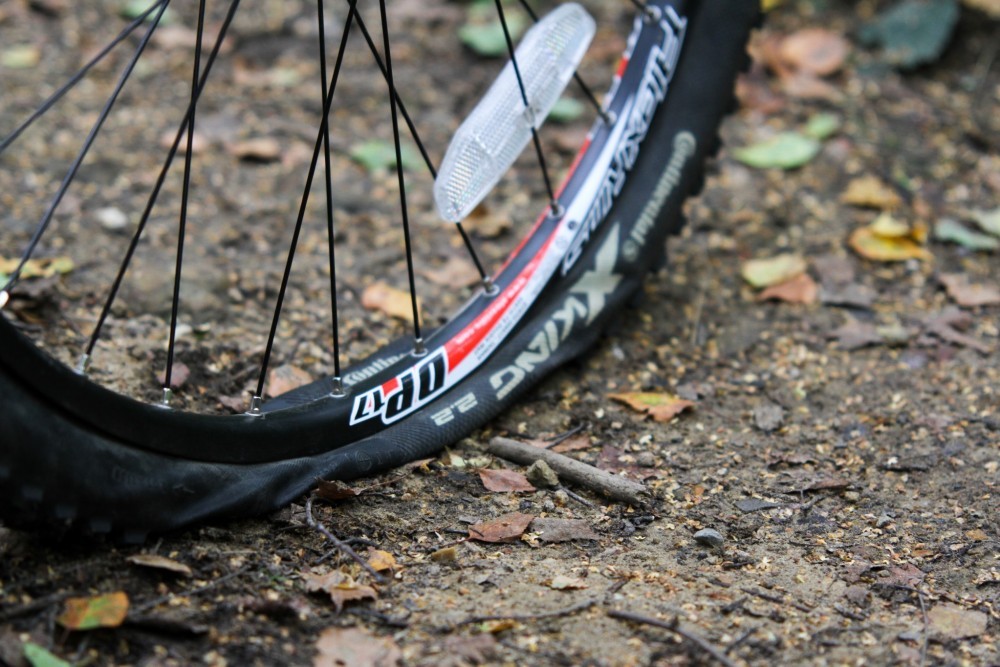
The two types of flats (and why it matters)
Not all flats are created equal. Understanding which type you’re dealing with tells you what went wrong and how to prevent the next one.
Puncture flats happen when something sharp — glass, a thorn, a staple, a wire — penetrates the tire and pierces the tube inside. You’ll find a single small hole, usually on the outer surface of the tube that faces the road. In San Francisco, glass is the top offender. Riding through the Panhandle after a weekend? You’re rolling through a minefield.
Pinch flats (also called “snake bites”) happen when your tire hits something hard — a pothole, a curb, a rock — and the tube gets pinched between the obstacle and the rim. You’ll find two small holes side by side on the tube, which is where the name comes from. These are almost always caused by running too little air pressure.
There’s a simple way to remember: puncture flats come from sharp things on the road. Pinch flats come from hard impacts with not enough air in the tire.
What’s actually happening inside your tire
Most bikes run a clincher setup: a rubber tire bead hooks onto the rim, and an inner tube inside holds the air. The tire’s job is to protect the tube from the road. The tube’s job is to hold pressure. When either one fails at its job, you get a flat.
The tire has several layers. The outer tread compound resists cuts and abrasion. Beneath it, a casing — usually nylon or similar fabric — provides structure. Some tires add a puncture-protection belt between the tread and casing: a strip of dense material (Kevlar, Vectran, or hard rubber) designed to stop sharp objects before they reach the tube.
The thickness and quality of that protection belt is the single biggest factor in how puncture-resistant a tire is. Budget tires often skip it entirely. Premium tires like Continental’s offerings with their “Safety System” or Schwalbe’s Marathon Plus with its SmartGuard layer can be nearly impervious to glass and thorns — at the cost of some extra weight and slightly less supple ride feel.
The six most common causes
1. Glass and debris. The obvious one. San Francisco streets collect broken glass, especially along curbs and in bike lanes. Riding through it at speed can push a shard straight through even decent tires.
2. Underinflation. This is the silent killer. When your tire doesn’t have enough air, the tube can fold and pinch against the rim on every bump. Road tires should run between 80-130 PSI depending on rider weight and tire width. Mountain bike tires run 25-40 PSI. Hybrid and city bikes sit around 50-70 PSI. Check your tire’s sidewall for the recommended range — and actually check your pressure before each ride.
3. Worn tires. Tires have a finite life. As the tread wears down, the puncture protection layer gets thinner or disappears entirely. If you can see the casing threads showing through the rubber, you’re riding on borrowed time. Most road tires last 2,000-4,000 miles. Mountain bike tires vary wildly depending on terrain and compound.
4. Embedded debris. This is the sneaky one. A small piece of glass or wire pokes into your tire but doesn’t go all the way through — yet. You ride on it for days or weeks, and each revolution pushes it a fraction of a millimeter deeper until it finally reaches the tube. This is why you can fix a flat, put in a fresh tube, and go flat again 20 minutes later. Always inspect the inside of your tire thoroughly after a flat.
5. Rim tape failure. Inside your rim, there’s a strip of tape covering the spoke holes. If that tape shifts, cracks, or wears through, the sharp edges of spoke holes or the ends of spoke nipples can puncture your tube from the inside. If you keep getting flats and can’t find anything wrong with the tire, check the rim tape.
6. Valve issues. A damaged or loose valve stem can leak air slowly. This isn’t technically a flat, but it feels like one. If your tire keeps going soft overnight, check the valve before blaming the tube.
How to dramatically reduce your flats
You can’t eliminate flats entirely — a well-placed nail will defeat any tire — but you can go from “every few weeks” to “maybe once a year” with these changes:
Check pressure before every ride. This single habit prevents more flats than anything else. Get a floor pump with a gauge. It takes 30 seconds. Tires naturally lose 1-5 PSI per day depending on tube material (latex tubes lose pressure faster than butyl).
Avoid the gutter. The edge of the road and the far right of bike lanes collect the worst debris — glass, gravel, metal fragments. Riding a foot or two further into the lane keeps you on cleaner pavement and is perfectly legal.
Inspect your tires regularly. Once a week, run your fingers (carefully) over the tread surface. Feel for embedded glass, thorns, or wire. Remove anything you find before it works its way through. Also check the sidewalls for cuts or bulges.
Replace worn tires before they fail. Don’t wait until you can see threads. When the tread is visibly flattened or the wear indicators (many tires have small divots that disappear when the tire is worn) are gone, it’s time.
Consider puncture-resistant tires. If you commute daily in the city, the extra weight of a puncture-resistant tire is worth it. Continental Gatorskins, Schwalbe Marathon Plus, and Specialized Armadillo are popular choices that can cut your flat rate dramatically.
Go tubeless. Tubeless setups eliminate pinch flats entirely and the sealant inside handles most small punctures automatically. The tire seals around the puncture before you even notice. This is now standard on mountain bikes and increasingly common on road and gravel bikes.
When a flat is telling you something
A single flat is usually just bad luck. But if you’re getting flats regularly, your tires are trying to tell you something:
- Multiple puncture flats: Your tires are worn out or not puncture-resistant enough for your riding environment. Time for better tires.
- Repeated pinch flats: You’re running too little pressure or your tires are too narrow for the terrain you’re riding.
- Flats on the inside of the tube (rim side): Rim tape problem. Replace it.
- Slow leaks that go flat overnight: Likely a valve issue, a very tiny puncture, or a porous tube. Try replacing just the tube first.
- Flats right after fixing a flat: You didn’t get all the debris out of the tire. Or the tire is so worn that new debris gets through immediately.
DIY vs. mechanic
Fixing a flat is the most fundamental bike repair skill, and every cyclist should learn it. All you need is tire levers, a spare tube, and a pump. YouTube has a hundred good tutorials.
That said, there are times to call in help:
- Tubeless tires that won’t reseal or have a large gash need proper tools and sealant to repair correctly.
- Recurring flats that you can’t diagnose — a mechanic can spot rim tape issues, spoke protrusions, or tire damage you might miss.
- Roadside emergency where you don’t have tools or a spare tube — that’s what mobile repair services exist for.
- E-bikes with hub motors in the rear wheel can be a real pain to remove the wheel on. If you’re not comfortable with the motor cable and axle nut, it’s worth getting help.
A flat tire is rarely the end of the world. But a pattern of flats is your bike asking for attention. Listen to it.
Stuck on the side of the road with a flat? We come to you anywhere in SF’s Richmond District and surrounding neighborhoods. Text us at (415) 723-8600 — same-day service is often available.