Bottom Bracket Creak, or Just a Loose Crank? How to Tell Before You Buy Parts
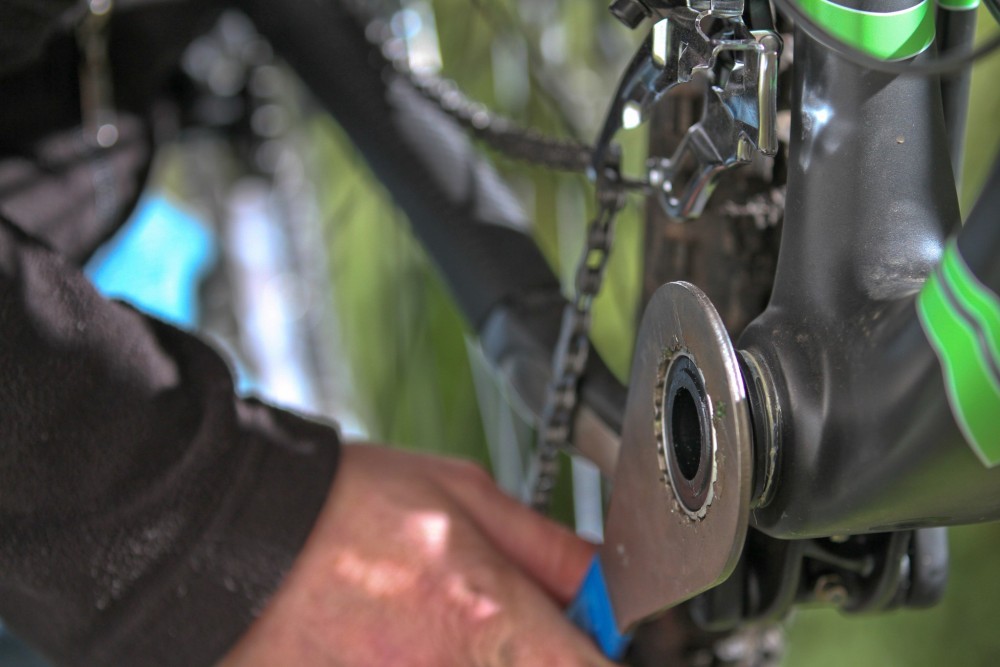
The phrase “bottom bracket creak” gets thrown around way too fast.
I get why. The noise seems to come from the middle of the bike, right under your feet, and it shows up when you’re pushing hard on the pedals. So riders hear one click per pedal stroke and jump straight to bearings. Sometimes they’re right. A lot of the time they are not.
The expensive mistake is buying a new bottom bracket before you’ve actually proved the bottom bracket is bad.
I’ve seen plenty of bikes come in with a fresh BB already installed, same creak, same annoyed rider, because the real problem was a dry pedal thread, loose chainring bolt, crank interface that was not seated right, or a seatpost that only complained when the rider was torquing the bike side to side on a climb. Noise travels through frames. Carbon is especially good at lying to you.
So here’s the version I trust in the stand and out in the field.
What a Bottom Bracket Actually Does
The bottom bracket is the bearing assembly that lets the crank spindle rotate inside the frame. On modern bikes that usually means either threaded cups or press-fit bearings at the bottom bracket shell. Different standards, same job.
When it’s healthy, it should turn smoothly under load, hold the crank in line, and keep water and grit out for as long as the seals can manage. When it starts to fail, the usual signs are not subtle forever. You’ll get roughness, binding, play, or contamination that keeps coming back.
What throws people off is that plenty of other parts load and unload in the exact same rhythm as pedaling, so they make a convincing fake.
The False Alarms I Check First
Before I condemn a bottom bracket, I check the cheap stuff and the common stuff.
Pedals are high on the list. Dry threads, worn pedal bushings, or a pedal body that clicks under torque can sound exactly like a BB because the force path is right next to it.
Chainring bolts do it too. Same with direct-mount chainrings that were installed dry or not torqued correctly. A tiny amount of movement there makes a sharp click every hard pedal stroke.
Crank arm interfaces are another big one. On Shimano Hollowtech II style cranks, for example, the preload cap is just for setting bearing preload, not for clamping the arm in place. Shimano’s dealer literature calls for the left crank arm fixing bolts to be tightened evenly to 12 to 14 N-m, while the preload cap itself is only lightly tightened. If that interface is assembled dirty, dry, or unevenly torqued, the bike talks back fast.
And then there’s the one riders hate hearing, the seatpost. If the noise shows up mostly when you’re seated and stomping, I will absolutely suspect the post, saddle rails, or seat clamp before I order bottom bracket parts.
The Signs That Really Point to the BB
A real bottom bracket problem usually gives you more than just a noise.
The first thing I want to know is whether there’s any side play at the crank. Grab a crank arm and try to push it laterally toward the frame, then pull it back out. There should not be a knock or visible movement. If there is, that’s not a mystery noise anymore.
The next check is bearing feel. I prefer doing this with the chain off the chainring so you’re not feeling drivetrain drag and derailleur clutch tension. Spin the crank slowly by hand. Healthy bearings feel smooth and even. Bad ones feel gritty, notchy, dry, or like they have a tiny patch of sand rolling around inside.
Water intrusion is another giveaway. If a rider has been through a wet winter, pressure-washed the bike, or ridden a lot of beachside grit, I pay close attention to any rusty staining, black paste around the seals, or a bearing that feels worse every ride instead of better after cleaning.
Noise plus side play, or noise plus gritty rotation, that is usually enough to stop pretending it’s just a pedal thread.
Why “Spin Test” Results Can Mislead You
This part matters because plenty of riders remove the chain, spin the cranks, and decide a bottom bracket is bad because it does not freewheel forever.
That test is useful, but only if you know what you’re feeling. Seals create drag. Grease creates drag. A new sealed cartridge bearing can feel slightly damped by hand and still be completely fine on the bike. What I do not want is roughness, notchiness, grinding, or play.
Smooth but slightly resistant is usually normal. Rough is not.
Threaded, Press-Fit, and Why Creaks Get Political
Riders love blaming press-fit. Sometimes for good reason.
A threaded bottom bracket gives you a defined cup interface, and if the shell is faced well and the cups are torqued properly it tends to stay quiet. Shimano’s current installation docs for threaded cups land in the 35 to 50 N-m range depending on the model, which is enough to matter. Under-torque, dirt on the shell faces, or old thread compound can absolutely create noise.
Press-fit systems can work well, but they punish sloppy frame tolerances harder. If the shell is slightly oversized, slightly out of round, or the bearing seats are imperfect, you can end up chasing the same creak with fresh bearings because the interface is the issue, not the cartridges themselves.
That is why I try to diagnose the source before the parts cannon comes out. A new bearing pressed into a bad fit is still a bad fit.
My Actual Order of Operations
When a bike comes in with a crank-area creak, this is roughly how I narrow it down:
First I isolate whether the noise happens seated, standing, or both. Seated-only noises widen the search away from the BB immediately.
Then I check pedal tightness, pedal condition, crank fixing hardware, chainring bolts, rear axle, and seatpost assembly. Yes, rear axle, because bikes are rude like that and noise can echo forward.
After that I check for lateral play at the crank and feel the bearings with as much drivetrain drag removed as possible.
If I still suspect the bottom bracket, I pull the crank and inspect what the interfaces look like in real life. Dry alloy on alloy. Rust marks. Washed-out grease. Fine grit packed behind a seal. Usually the answer gets obvious once it’s apart.
When to Service, and When to Replace
If the bearings feel smooth and the problem is clearly at the interfaces, a clean-and-reinstall job may be all the bike needs. Fresh grease or the correct assembly compound in the right places, proper torque, done.
If the bearings are rough, loose, or contaminated enough that the seal has lost the fight, replacement makes more sense than pretending a flush will save them. Most modern bottom brackets are not worth heroic revival work. They’re wear parts.
The one thing I would not do is keep riding a bottom bracket with real play. Once the crank can move laterally, you start loading the spindle and chainline in ways that wear other parts too. Riders notice the creak first. The bike notices the misalignment.
The Bay Area Version of This Problem
Around San Francisco I see two patterns a lot.
One is commuter and gravel bikes that live outside more than their owners admit. Fog, road spray, and occasional washdowns do a quiet number on bottom bracket seals.
The other is mountain bikes that get rinsed after every muddy Marin or Pacifica ride, sometimes with way too much enthusiasm. A gentle wash is fine. Driving water toward bearing seals is not maintenance. It’s scheduling.
The Short Version
Do not replace a bottom bracket just because the noise seems to come from the middle of the bike.
Prove it.
Check for side play. Remove chain drag and feel the bearings properly. Rule out pedals, chainring bolts, crank interfaces, and the seatpost before you spend money. And if the crank spins smooth but the noise only shows up seated on climbs, I would put real money on something higher up the bike.
Bad diagnosis is what makes “bike maintenance is expensive” true.
Good diagnosis is usually quieter.
Hearing a crank-area creak and not sure whether it’s bearings or just a dry interface? Presidio Bikes is a mobile bike repair service in San Francisco. We can diagnose it at your place, without the usual parts-guessing routine.